


Our Blog Posts
Latest Kitchen Trends 2024
Posted on: 20/08/2025

Expert Advice - Over 35 years experience

We're Rated Excellent on Trustpilot

1000's of Products In Stock Ready

Exclusive Trade Discounts
Choosing the right cabinet door system can have a significant impact on a project’s design, performance, and usability.
Two increasingly popular options in modern kitchens, bedrooms, and fitted furniture are bifold cabinet doors and pivot cabinet doors, and while both deliver contemporary style and a myriad of practical benefits, they’re suited to very different applications within cabinetry and storage design.
Our experts at Quest have compared bifold and pivot cabinet door systems across design, space, performance, and installation – allowing you to select the right solution for your upcoming cabinetry project.
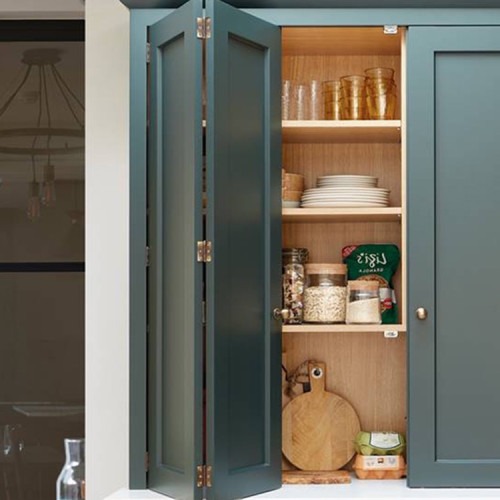
Bi-folding cabinet doors consist of two or more connected panels that fold and stack neatly to one side along a concealed track system within the cabinet opening.
Rather than opening outwards like traditional hinged cupboard doors, bifold cabinet systems maximise access while reducing projection into the room. They are commonly used for:
Bifold cabinet doors that use the FurnFold system, to give one example, are available in a wide range of finishes and materials, and are the ideal option for projects where space efficiency and improved accessibility are top priorities.
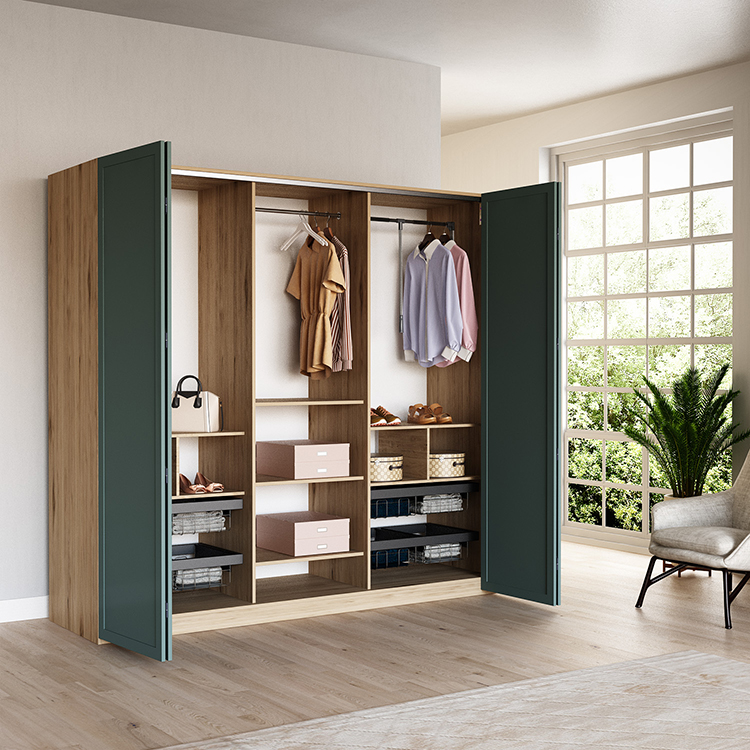
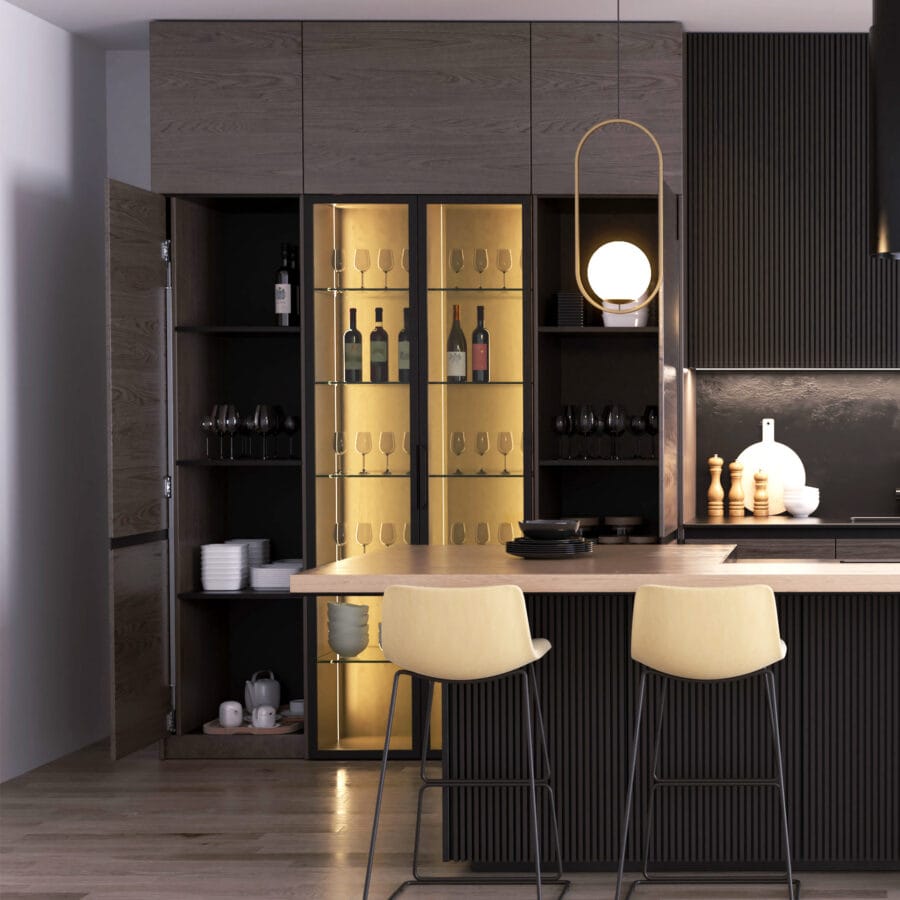
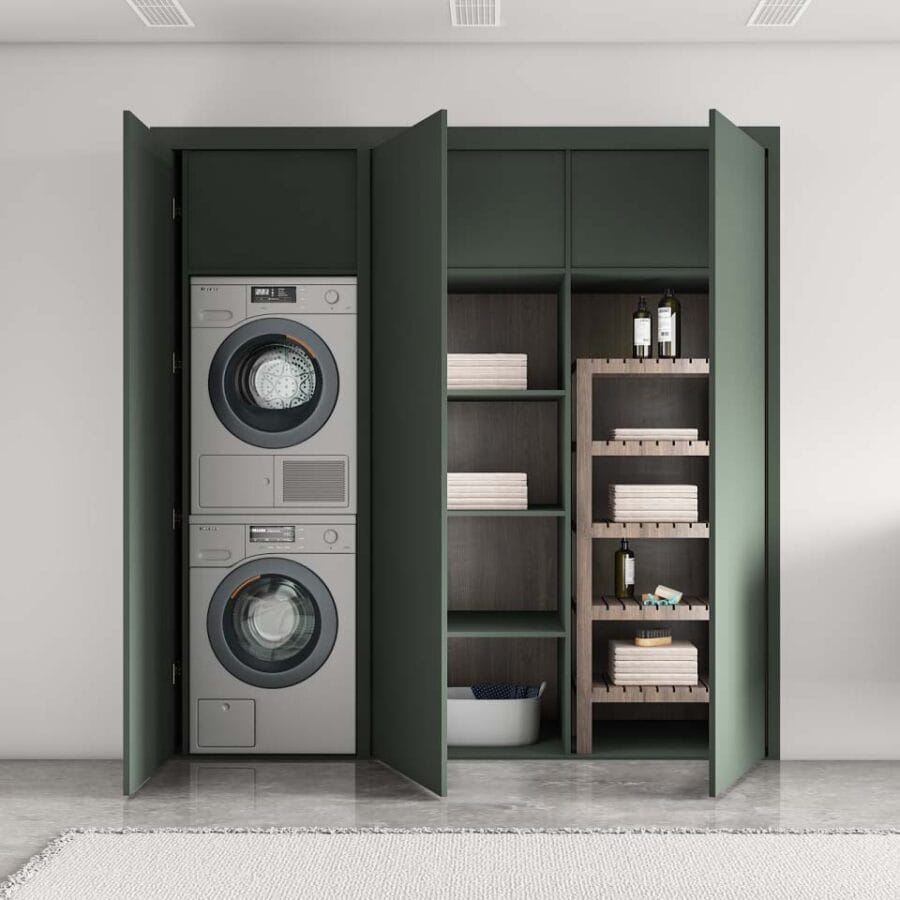
Pivot cabinet doors are a specialised system designed to open outwards on hinges to 90 degrees before smoothly sliding back into a concealed side compartment within the cabinet.
This mechanism allows the doors to be neatly tucked away inside the unit, keeping the opening completely clear and providing unobstructed access to the interior.
These doors are commonly used for:
They offer a minimalist, architectural aesthetic within fitted furniture, along with exceptionally smooth operation.
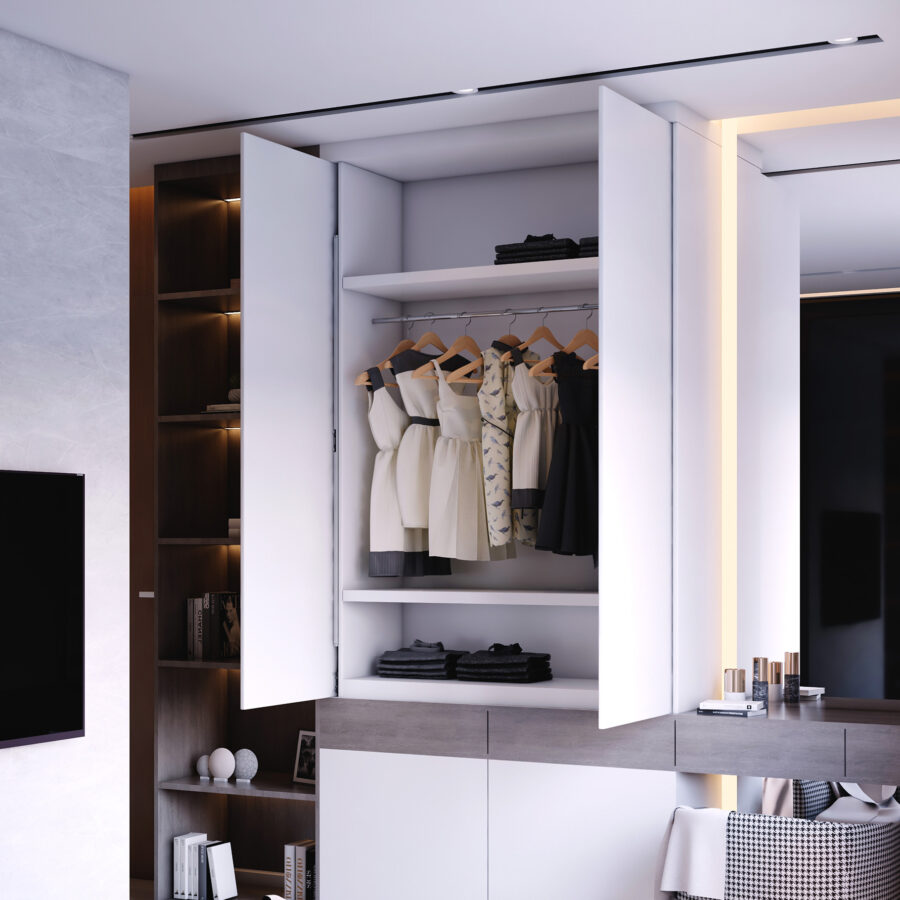
Bifold cabinet doors are about accessibility and space efficiency. When opened, they provide improved access to internal storage while minimising obstruction in front of the unit. They are ideal for kitchens and bedrooms where practical use is a priority.
Pivot cabinet doors, however, are about visual impact and refinement. They create a premium, architectural feel and are often chosen for their clean lines, symmetry, and minimal hardware appearance, such as that shown in the Slide&Hide Pocket Pivot Door Kit.
Bifold cabinet doors need space for the panels to fold and stack when open. While they reduce outward projection, internal layout planning is important to ensure shelves and drawers are not obstructed.
Pivot cabinet doors require a swing radius, as part of the door moves in both directions when opening. This means clearance is needed in front of the cabinet unit.
For tighter kitchen or bedroom layouts, it’s crucial to assess whether reduced projection (bifold) or single-panel swing (pivot) is more practical for your client’s environment.
Bifold cabinet systems are ideal for wider cupboard openings, but require two connected panels to move together. High-quality hardware ensures smoothness, though users are still guiding multiple door sections.
Pivot cabinet doors operate as a single and double balanced panel and often feel lighter and more refined in motion. When fitted with soft-close or dampening mechanisms, they offer a premium, effortless experience – particularly desirable in high-end kitchens and fitted wardrobes.
If ease of operation and premium feel are priorities, pivot cabinet doors often deliver a more refined result.
Bifold cabinet doors rely on hinges, rollers, and track components across multiple panels, which means more moving parts and more long-term wear points. With high-quality hardware and proper installation, performance is excellent, but maintenance is paramount.
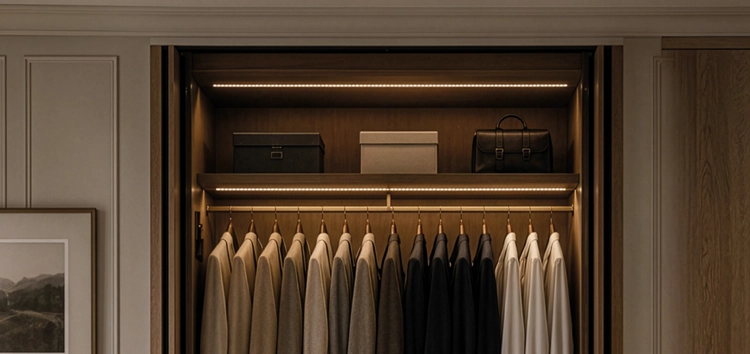
Pivot cabinet doors distribute weight through the top and bottom pivot points within the cabinet structure, helping prevent sagging on tall or heavy doors. This makes them particularly suitable for full-height wardrobe or pantry units.
Bifold cabinet doors require accurate alignment of tracks and hinges within the cabinet carcass. Cabinet construction must allow sufficient internal depth for folding panels and hardware clearance.
Pivot cabinet doors require solid fixing points at the top and bottom of the cabinet opening to support the weight of the door. Cabinet makers should account for pivot positioning, internal clearance, and precise tolerances to ensure smooth operation.
Both systems benefit from high-quality hardware with built-in adjustability to fine-tune alignment after installation.
Because bifold cabinet systems involve multiple panels and track mechanisms, material and installation costs can increase compared to standard hinged cupboard doors.
Pivot cabinet doors involve fewer panels but require specialist hardware capable of supporting heavier weights. While the hardware may carry a higher unit cost, installation can be more streamlined due to fewer moving components.

Bifold cabinet doors are the ideal choice when the goal is to:
Pivot cabinet doors perform best when your client wants to:

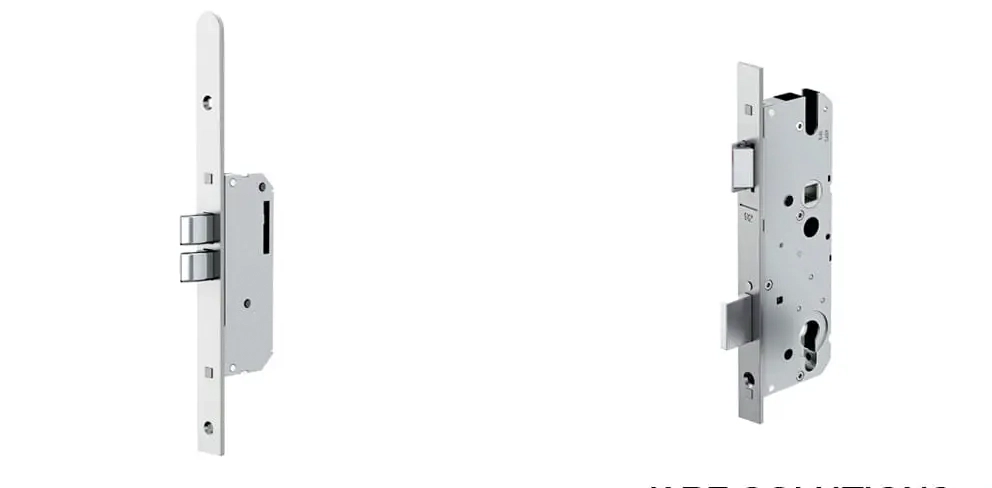
No matter which cabinet door system you choose, hardware quality determines performance. Load ratings, adjustability, damping, corrosion resistance, and concealment all affect how the door feels and functions long term within kitchen and bedroom environments.
For professionals serving the premium kitchen and furniture industries, choosing the right hardware ensures smooth installation, easy adjustment, and client satisfaction.
At Quest, we’re proud to supply a range of premium options to help transform your clients’ cabinetry, from the DuraFold bi-folding doors for cabinet and wardrobe doors, to the ConcealX Single pivot door kits for statement units.
So, you’re guaranteed to find the ideal option to help you deliver outstanding results for every project.
Deliver reliable performance, refined aesthetics, and long-term value on every project with Quest’s professional-grade hardware solutions.
Explore our full range online today and order online for convenient delivery in time for your next project, or get in touch with our friendly team for expert advice.
Ordering is faster, and repeat purchases are simpler with Quest.
Discover how My Quest and Q Points can transform your business operations, streamline purchasing, and lower costs across every order.